Garbatella was founded on February 18, 1920 as a working-class neighborhood inspired by the garden city model, designed to house the workers of the new industries in the Ostiense–San Paolo area and the planned river port that was to be built along the Tiber. Even today, in the beautiful Piazza Benedetto Brin, you can still see a brick bearing an inscription celebrating the start of the neighborhood’s construction.
Over time, Garbatella has become one of the most beloved areas of Rome: a maze of courtyards, outdoor staircases, inner gardens, and colorful facades, where the original urban layout coexists with later 20th-century additions.
The Origin of the Name “Garbatella”
The most romantic explanation attributes the name “Garbatella” to a “kind and beautiful innkeeper” who welcomed travelers along Via Ostiense. According to some, this famous innkeeper may have been “Carlotta,” to whom the well-known Fontana della Carlotta near the Scalinata degli Innamorati (Lovers’ Staircase) is dedicated. Another theory traces the name to the adjective “garbata,” meaning “courteous,” referring to a farmhouse or estate in the area. Historical research citing old land records confirms that the name originated from common usage and was later officially adopted.
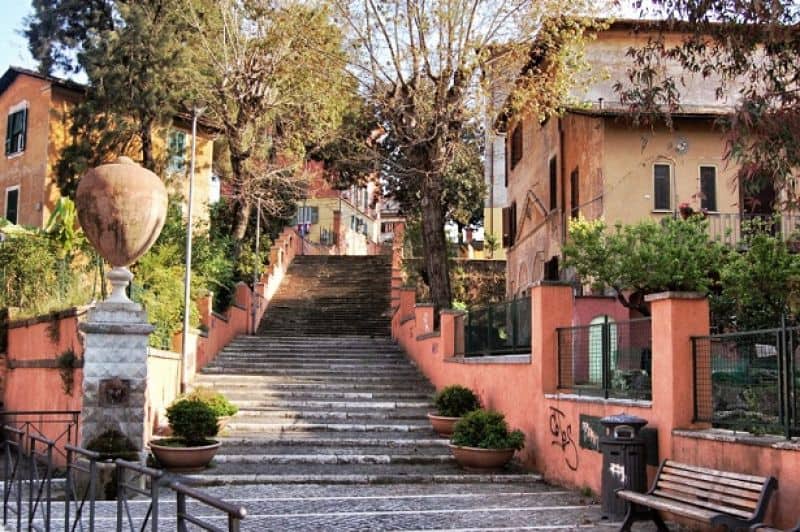
The Carlotta Fountain and the Lovers’ Staircase
Urban Planning and Architecture of Garbatella
The first sections were designed as small residential clusters with shared courtyards, gardens, and communal spaces; the building types range from terraced houses to small apartment buildings with open corridors, and even so-called “suburban hotels,” originally intended for families in transit. The so-called “Roman barocchetto” style — soft-toned plasterwork, small loggias, and decorative cornices — gives the district its scenic yet welcoming character. During the 1930s and post-war years, new, simpler buildings were added, but the original layout that makes Garbatella so distinctive was never lost.
Life in the Garbatella Neighborhood
Today, Garbatella is a lively mix of longtime residents, students, and creatives. Shaded squares, murals, taverns, social spaces, and cultural venues keep the neighborhood vibrant all year round.
Several films and TV series have been shot here (including “I Cesaroni”, which made the area even more famous), and in 2020, the neighborhood’s centennial inspired a full program of events, exhibitions, and themed tours celebrating the history of its early buildings.
Among the most characteristic spots in the neighborhood, it is also worth visiting Piazza Damiano Sauli, a place that reflects the everyday life and authentic spirit of Garbatella.
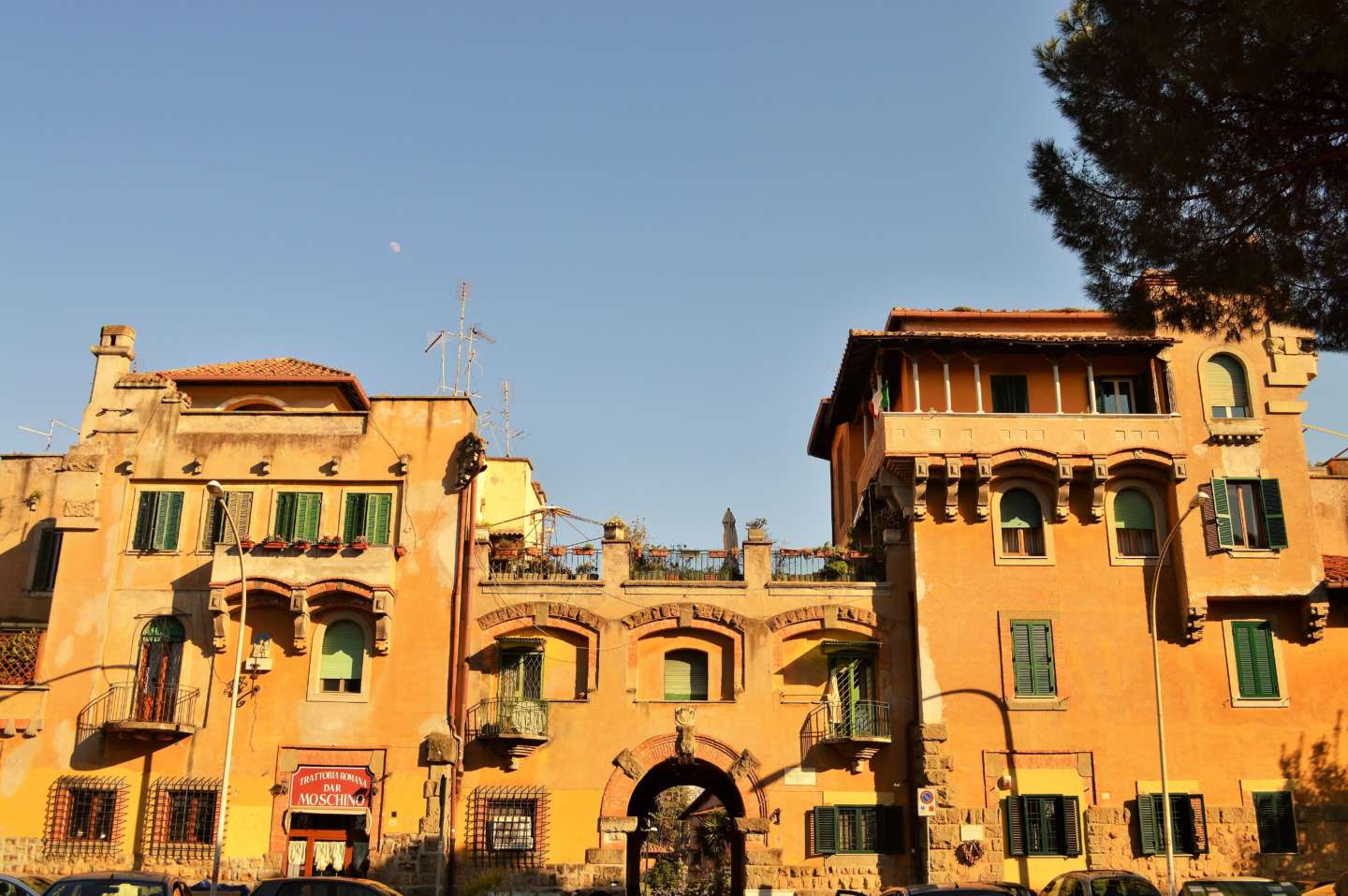
Piazza Benedetto Brin
How to Get to Garbatella
Garbatella is served by Metro Line B (Garbatella stop) and several bus lines connecting it with Piramide/Porta San Paolo, the city center, and EUR. On foot or by just a few metro stops, you can easily reach Ostiense and the San Paolo district.
Tourist Accommodations Near Garbatella
If you’re looking for tourist apartments with kitchens, ideal for families or groups, our Little Blue and Little Red apartments in the nearby San Paolo district (just one stop away on Metro Line B) are a very practical solution: twin one-bedroom apartments in the same building, flexible short-term rentals, and a discount when booked together. Perfect for exploring Garbatella and all of southern Rome.