
In one of the most evocative settings between Testaccio and Ostiense stands the Pyramid of Cestius, a rare and remarkably well-preserved example of a funerary monument in Rome.
The Pyramid was built between 18 and 12 BC as the tomb of Gaius Cestius Epulo, a figure who held important roles in Roman religious and political life. He was praetor, tribune of the plebs, and a member of the priestly college of the Epulones, responsible for organizing sacred banquets.
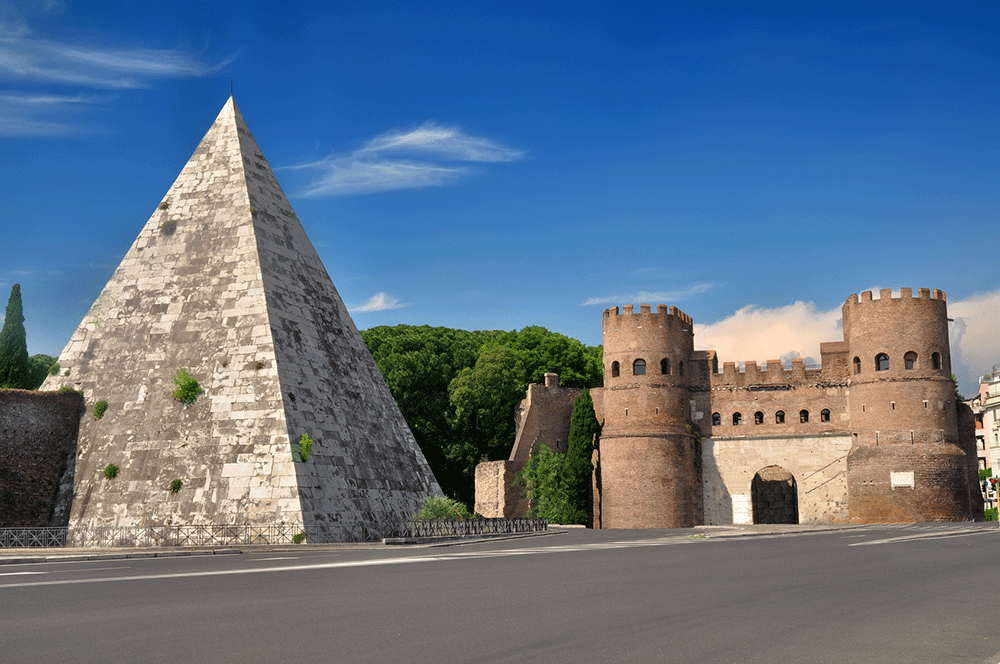
The Pyramid is approximately 36.40 metres high, with a square base measuring just under thirty metres on each side, and is distinguished by its external cladding of Luna marble, also known as Carrara marble.
On the eastern façade, a Latin inscription is carved: “Opus absolutum ex testamento diebus CCCXXX”, stating that the monument had to be completed within three hundred and thirty days, under penalty of the heirs losing their inheritance.
The interior of the Pyramid contains a small burial chamber with a barrel vault, bearing traces of frescoes depicting allegorical figures.
At the time of construction, the chamber was sealed and walled up, as in Egyptian tombs, but it likely contained no valuable objects, since an Augustan law prohibited the display of luxury in funerary monuments.
An interesting historical curiosity: during the Middle Ages, the Pyramid was mistakenly believed to be the tomb of Remus, the legendary founder of Rome.
In the 17th century, Pope Alexander VII promoted excavations that brought the inscription and several ancient structures back to light.
A key factor in the Pyramid’s preservation was its incorporation into the Aurelian Walls between 272 and 279 AD, which protected it from later demolitions.
When open to the public, access to the interior chamber is possible through guided tours by reservation.
If you are staying at the Little Blue and Little Red apartments, offered by i-Roma and located in the San Paolo district (Via Timoteo, a side street off Via Ostiense), reaching the Pyramid of Cestius is quick and easy.
The two twin apartments, well connected to Rome’s public transport network, allow you to reach the Pyramid very easily, whether by car (just a few minutes thanks to the proximity of Via Ostiense and the surrounding main roads), on a pleasant walk, or with a short trip by metro.
Thanks to their strategic location, the Little Blue and Little Red apartments are an ideal starting point for exploring not only Rome’s central landmarks, but also more unusual and atmospheric sites such as the Pyramid of Cestius.