
Developed along the ancient road that once connected Rome to the port of Ostia, Ostiense is one of the symbols of modern Rome: an area that grew between the late 19th and early 20th centuries with railway stations, industrial plants, warehouses, and infrastructure that accompanied the city’s industrial transformation. Many of those structures — gasometers, depots, power plants — are today icons of Roman industrial archaeology and form the backdrop to new cultural spaces.
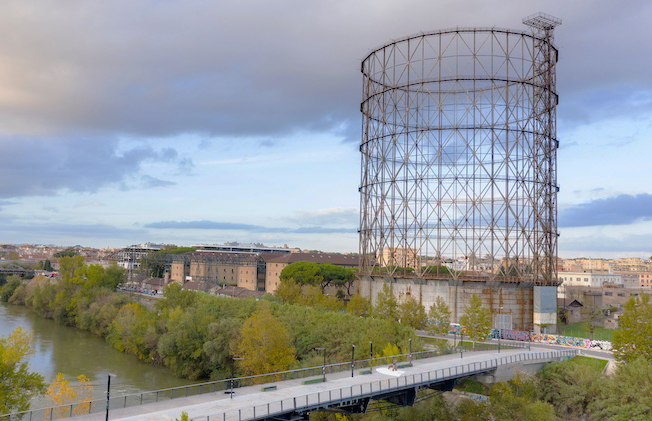
The Gasometer of Rome.
Ostiense: From Industrial Heritage to Urban Creativity
When Rome became the capital of the Kingdom of Italy, the area south of the Tiber was identified as a corridor to the sea and a service hub. Here rose the Ostiense railway station, the great wholesale markets, the Montemartini power plant, and storage facilities that attracted workers and working-class housing. As industrial activities were progressively abandoned, warehouses and infrastructure were reconverted: the Centrale Montemartini now hosts ancient statues among turbines and boilers; the outline of the Gasometer has become a highly photographed symbol; and several venues now open for exhibitions, events, and summer festivals.
In today’s urban geography, Porta San Paolo and the Pyramid of Cestius mark the boundary toward the Historic Center of the Ostiense district, separating it from Testaccio and Viale Aventino.
Street Art, Food, and Nightlife in Ostiense
In recent years, the Ostiense district has become a laboratory of contemporary creativity: entire façades host murals by international artists (including the famous work by Blu near the river port), former factories have turned into cultural hubs, and trendy breweries and eateries coexist with historic Roman trattorias. The nearby districts of Testaccio, Garbatella, and San Paolo expand the area’s appeal: an evening might start with a visit to Montemartini, continue among street art, and end with dinner in one of the many local restaurants.
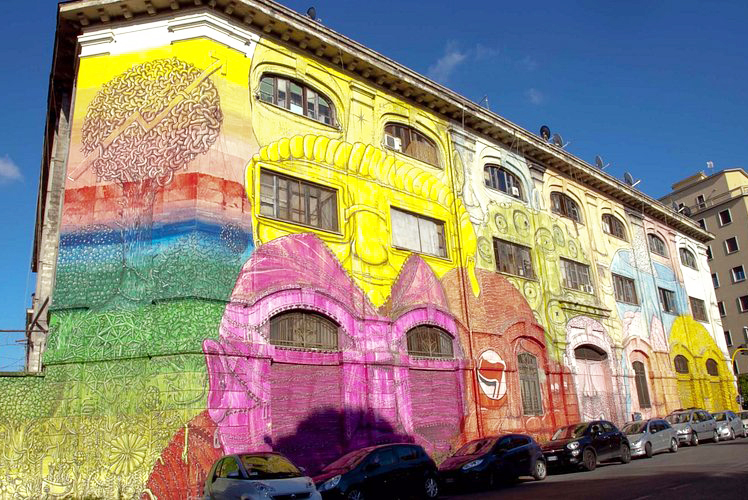
The street art work by Blu in the Ostiense district.
Main Connections in the Ostiense District
The Ostiense area is very easy to reach: Metro Line B (Piramide and Garbatella stops) connects in just a few stations to the Colosseum and Termini; regional and airport trains arrive at Roma Ostiense station; and the Roma–Lido railway departs from Porta San Paolo toward the sea. Several bus routes and a network of bike lanes along Via Ostiense make getting around the area simple and convenient.
Where to Stay Near the Ostiense District
If you prefer the comfort of tourist apartments complete with kitchen and private spaces, our Little Blue and Little Red apartments in the San Paolo district are just a few metro stops from Ostiense (and within walking distance for those who enjoy a stroll). These twin apartments, located in the same building, feature a double bedroom, living room with kitchenette and sofa bed, bathroom, balcony, Wi-Fi, and air conditioning.
Flexible short-term rentals from two to thirty nights, with a discount when booked together: the semi-detached apartment rental option is perfect for families and groups of friends who want to explore Ostiense and southern Rome in comfort.